
How it works
Systems change. The experience shouldn't.
Digital Venue is a layer, not a replacement. It sits on top of the systems an institution already owns, and it is built to survive those systems being swapped underneath it.
01 / Three layers
They arrive with a question in their own words, in whichever language they think in, on whatever device is in their hand. They do not know or care which systems answer them.
The surfaces the public meets and the console staff run them from. It's a layer, not a system of record, so it never becomes the home of your catalogue. It reads what you already own.
They stay exactly where they are, owned and administered by whoever owns them today. Replace one and the surface above it does not change.
02 / What your staff do
The console is the product, not a settings screen.
Librarians, teachers and curators change what the agent does, and the change is live. There is no ticket to us, no release cycle, and no developer between a curator and the thing a visitor reads.
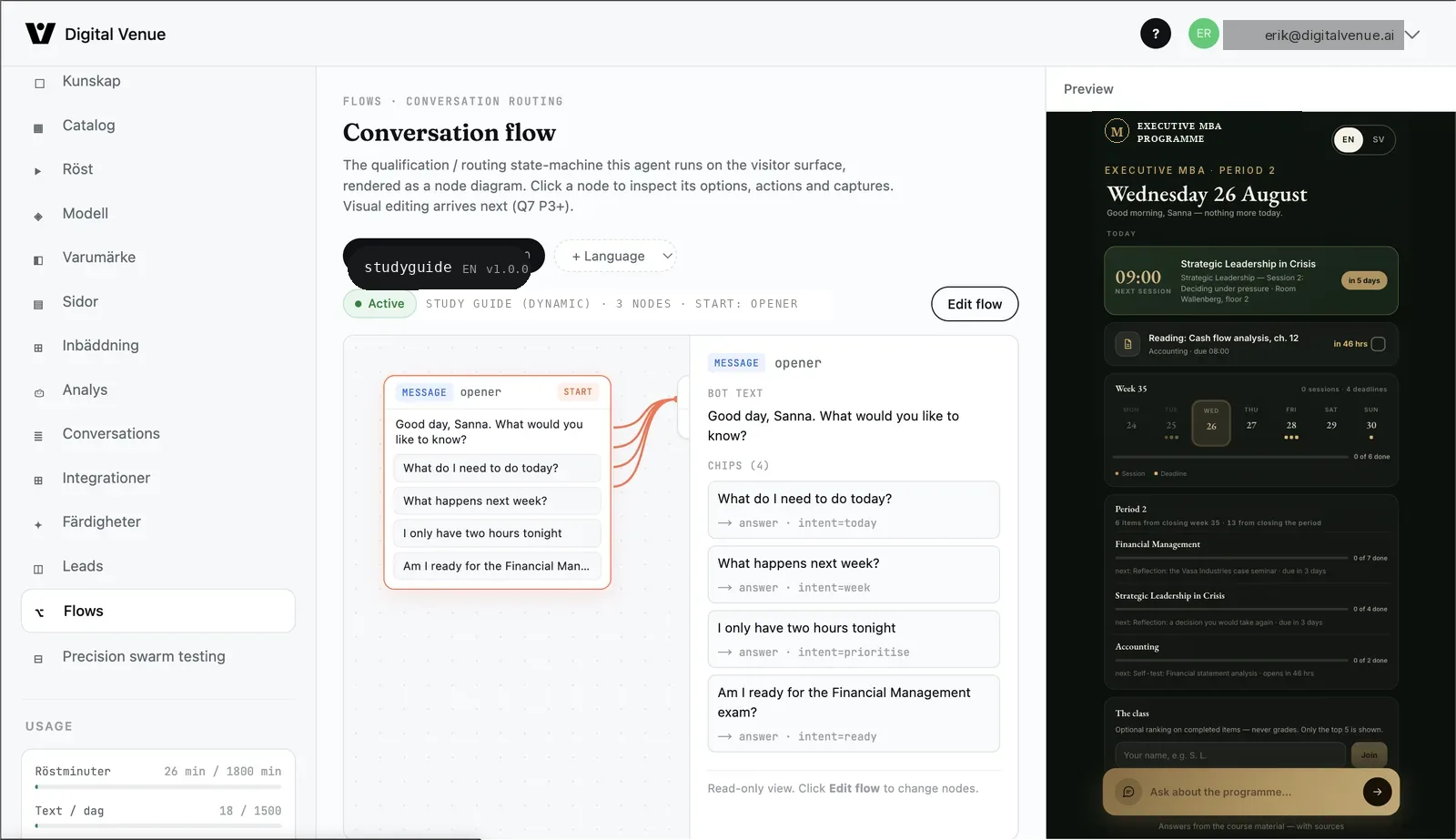
What the agent asks, what it looks up, when it hands over to a person. Owned by the service, not scripted by us.
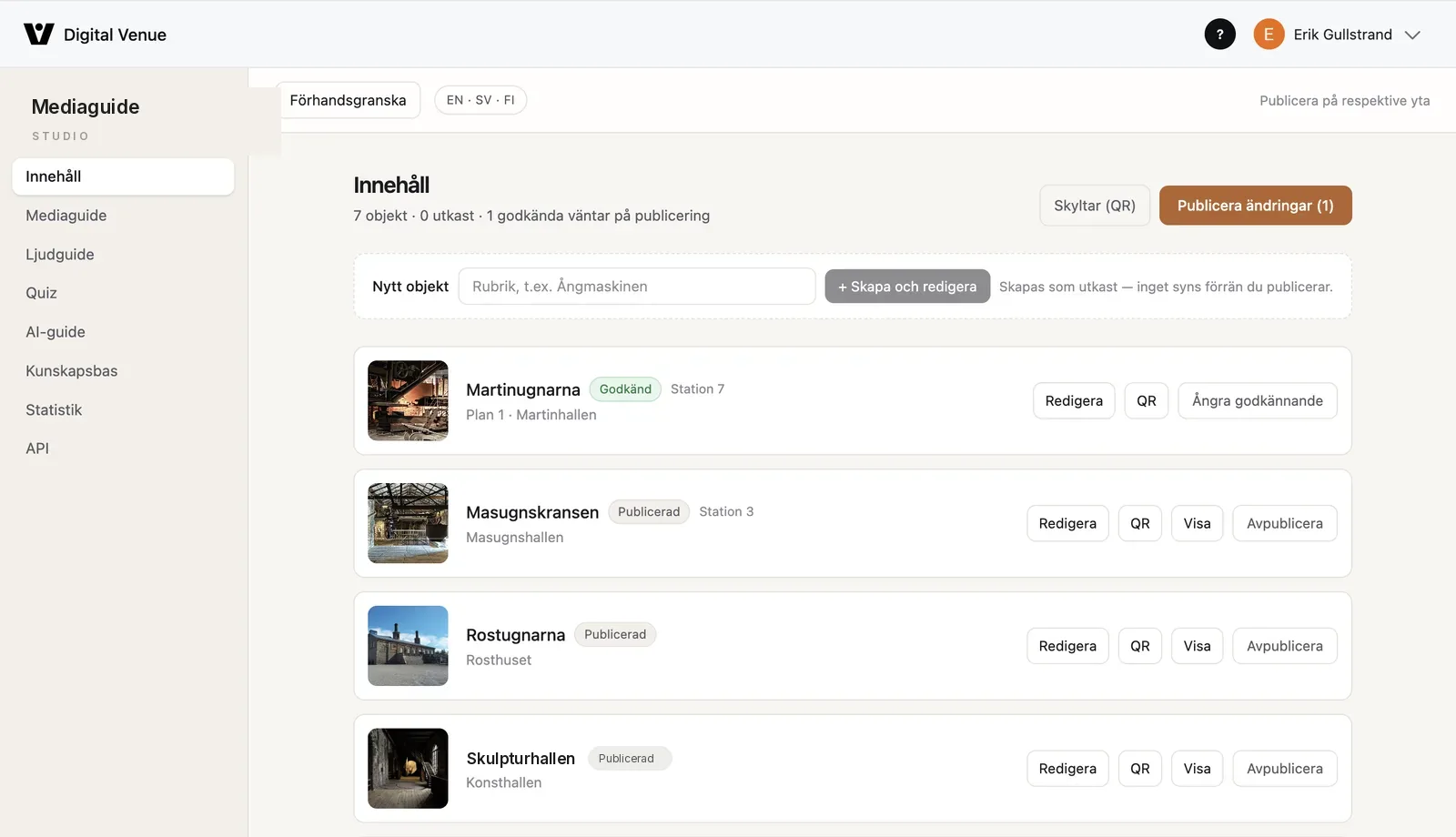
Nothing goes live until a curator approves it. Printable signage and QR codes come out of the same screen.
Added, corrected and withdrawn by staff. Withdraw a document and the agent stops citing it.
Voice and text. A deployment can open in sixteen languages without sixteen content teams.
Visible rather than buried. Open weights and European hosting by default; alternatives are explained, not hidden.
03 / Before the public sees it
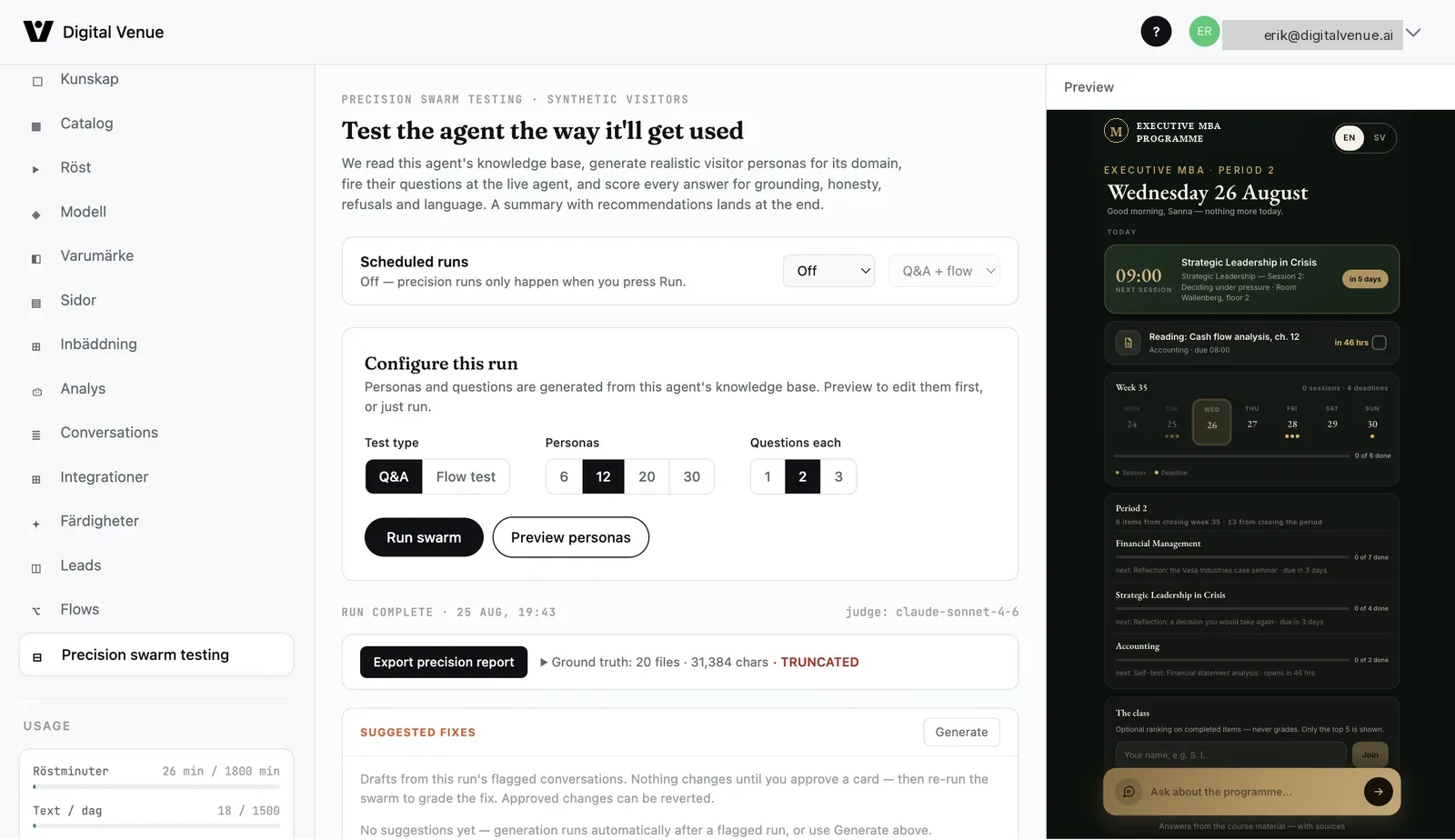
Tested against synthetic visitors, scored on every answer.
An agent that is confidently wrong in a library is worse than no agent at all. So before a deployment opens, generated visitor personas interrogate it and every answer gets a score. Is it grounded in your material? Is it honest about what it doesn't know? Does it refuse what it should refuse? And does it answer in the language it was asked in?
04 / Getting one live
The catalogue, the learning platform and identity are managed as connections in the console. Swapping one is a configuration change, not a rebuild.
Replace the catalogue and the visitor never notices. This cuts both ways, deliberately: changing us does not mean changing the catalogue either.
Documented in the contract, including the format and the timeline. You do not have to ask us first.
The systems underneath stay where they are, and the people who run them stay involved. We are not here to displace them.
Thirty minutes, and you'll know whether this fits.
We'll show you a live deployment, walk through what sits underneath it, and tell you plainly what we don't do.