
Schools · Libraries · Museums
Rethinking how society learns. We build the AI schools, libraries and museums run.
AI literacy isn't taught by a chatbot. It's taught how people have always learned. Through proven material, by knowledgeable educators.
Live across public libraries and museums · launching across Europe.

01 / The argument
Learning through an AI you control creates literacy, not dependency.
Students, readers and visitors already use AI every day. Most often using foreign products, trained on the open web, accountable to nobody in the room.
The question is no longer whether people will learn with AI. It is whether the institutions we trust to educate, the school, the library and the museum, are part of the process. If they are not, a public's understanding of its own history, literature and science is shaped by the model that happens to answer.
AI literacy, in practice, means something concrete: the library's catalogue, the school's course material, the museum's collection as the basis, funnelled through an agent the staff designed and can see inside. Not AI instead of institutions. Institutions, literate in AI.
What that requires
The catalogue, the course material, the collection. Withdraw a document and the agent stops citing it.
They are the educators. The console is theirs; the flows, the content and the tone are decided by the people who own the service.
No shared tenancy. Open-weight models by default. Your data in open formats, exportable at any time.
Swedish, English, and whatever language the people walking in actually speak. Voice or text.
02 / Why this
We built AI for the institutions hardest to win. Now we take that trust into schools.
A library will not deploy what it cannot audit; a museum will not let a machine speak in its name. We built for that: citations, a curator in the loop, EU-only hosting, security-reviewed.
Offers out in five more countries.
Distribution in year one, not year five.
The security and sovereignty file was already done, and it was a major reason a top-20 European business school said yes. It stays with every school, and with every learner after.
Who Americans trust
| Public libraries | |
|---|---|
| Museums | |
| Scientists | |
| Local news | |
| National news | |
| Business | |
| Government | |
| Social media |
Libraries and museums are the foundation of the business and the source of our credibility. No one else earned that trust first; it was the plan from day one.
03 / DEAN
Your school survival partner
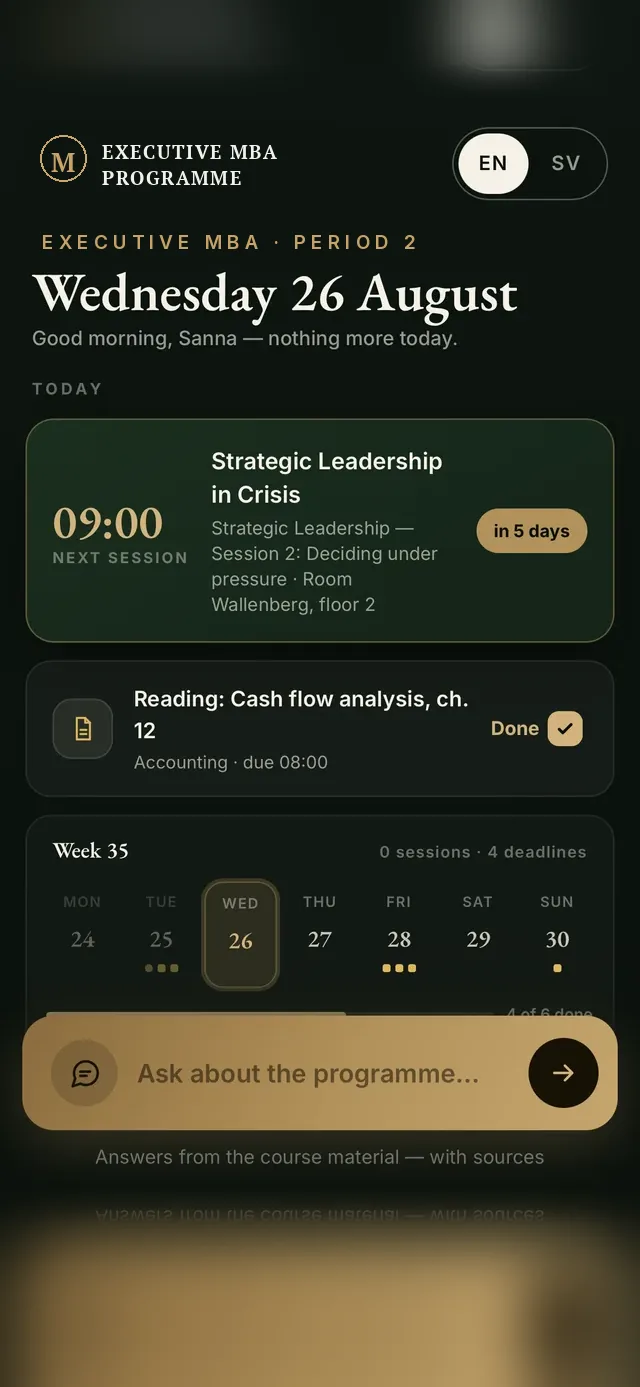
DEAN, the learning companion that belongs to the person.
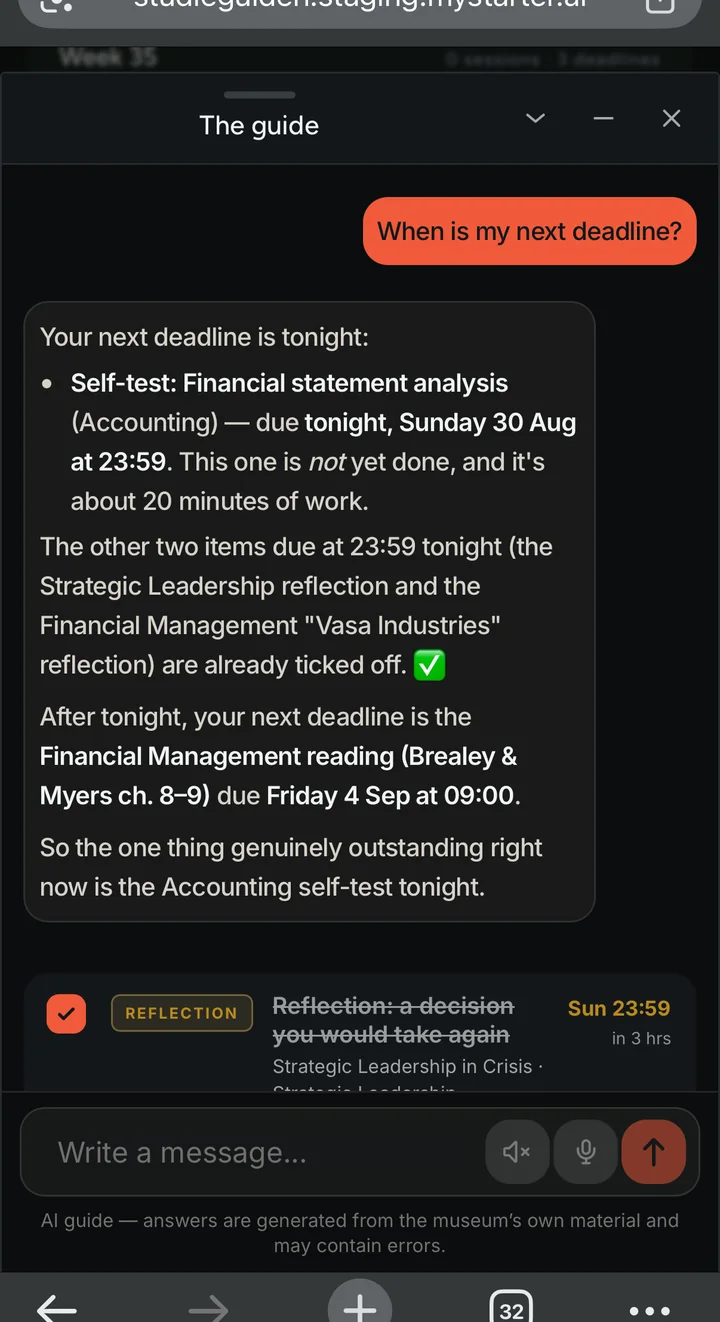
Licensed by the school, owned by the learner. DEAN runs the programme with the student: the schedule, self-tests, audio briefs and spoken reflection that reaches faculty. In executive education it adds a pre-brief, a recap in the faculty's voice and a twelve-month follow-up that continues at work.
The school runs it and sees what it needs to teach. The record belongs to the person: grades, cases, discussions and reflections stay theirs when the programme ends, and go with them to the next institution. GDPR already gives every learner the right to a copy of their data; from December 2026 the EU Digital Identity Wallet puts diplomas in the person's own wallet.
Grounded
Citations, contradiction detection, a teacher in the loop.
Sovereign
Runs on any cloud, EU-only for EU customers, exportable by the person.
Accountable
A testing engine grades synthetic conversations before release; a report the employer can read.
Persistent
One account per person across programmes, institutions and years.
Where it goes
Licensed by the school. In a paid pilot at a top-20 European business school.
Offered at graduation: grades, cases, discussions and the class as contacts, kept. It belongs to the person and goes with them.
Museums, galleries and venues reach the cohort with curated, opted-in invitations. The person is never the product.
04 / Three institutions
The three institutions a society's knowledge rests on.
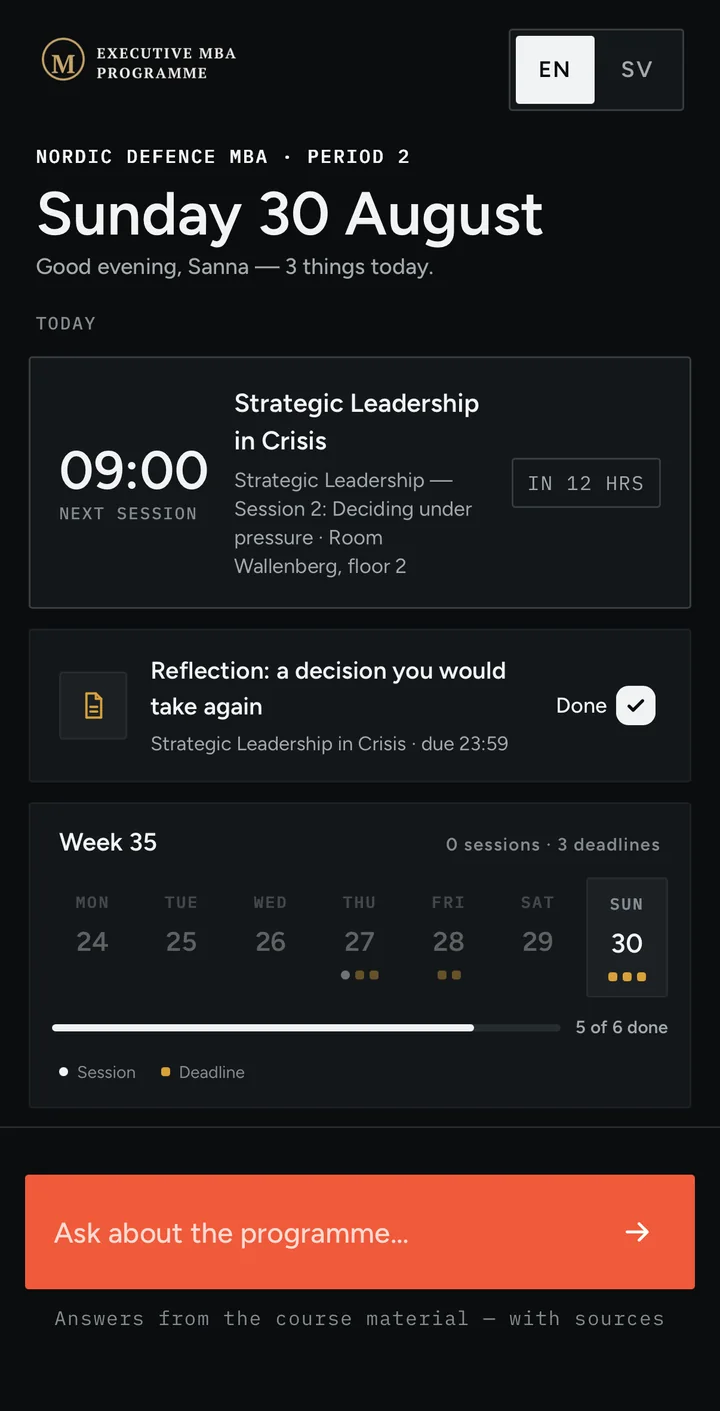
DEAN, a study layer inside the tools students already use. It's built on the school's own material, not the open web, the teacher can see everything, and a top-20 European business school is running a paid pilot right now.
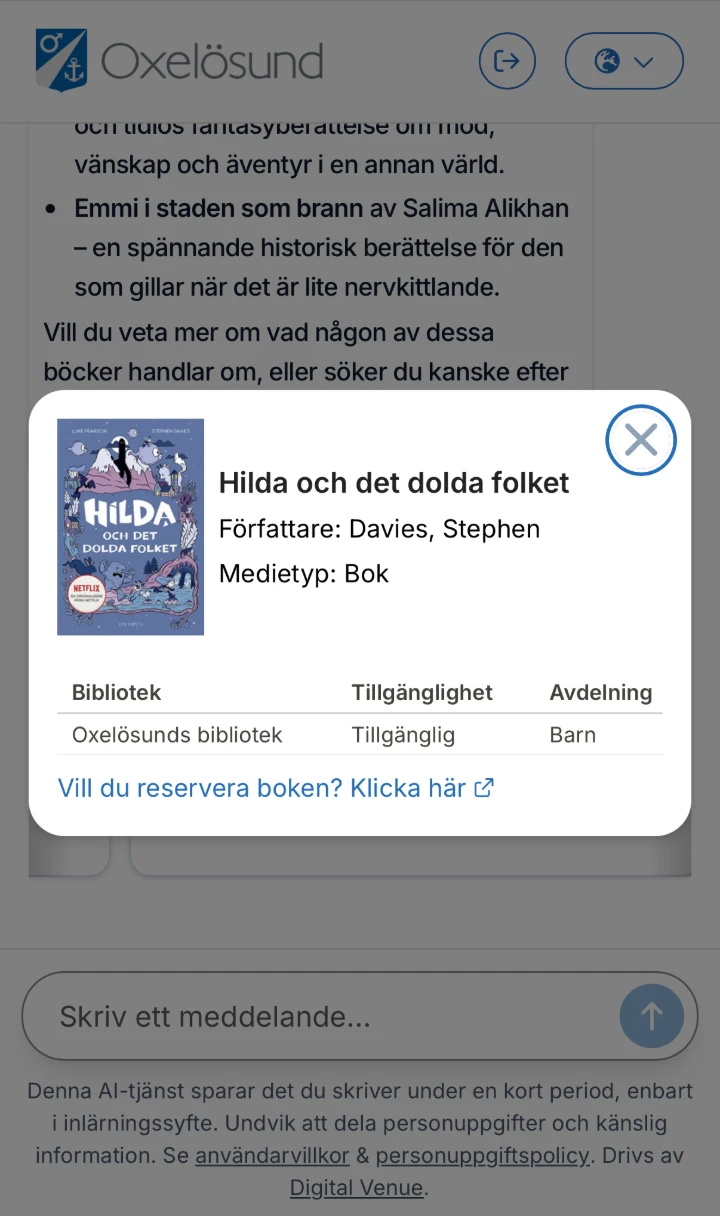
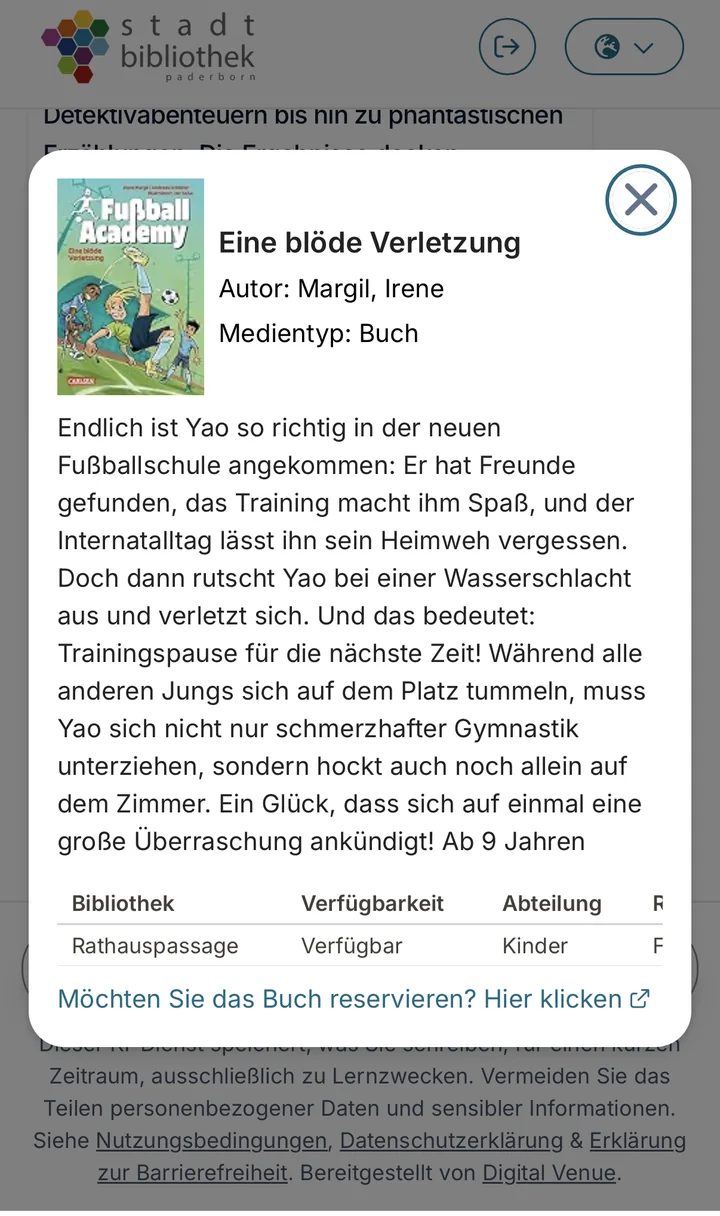
Conversational, multilingual, voice or text. It runs on the catalogue the library already has, so a reader's question ends in a book they can actually borrow.
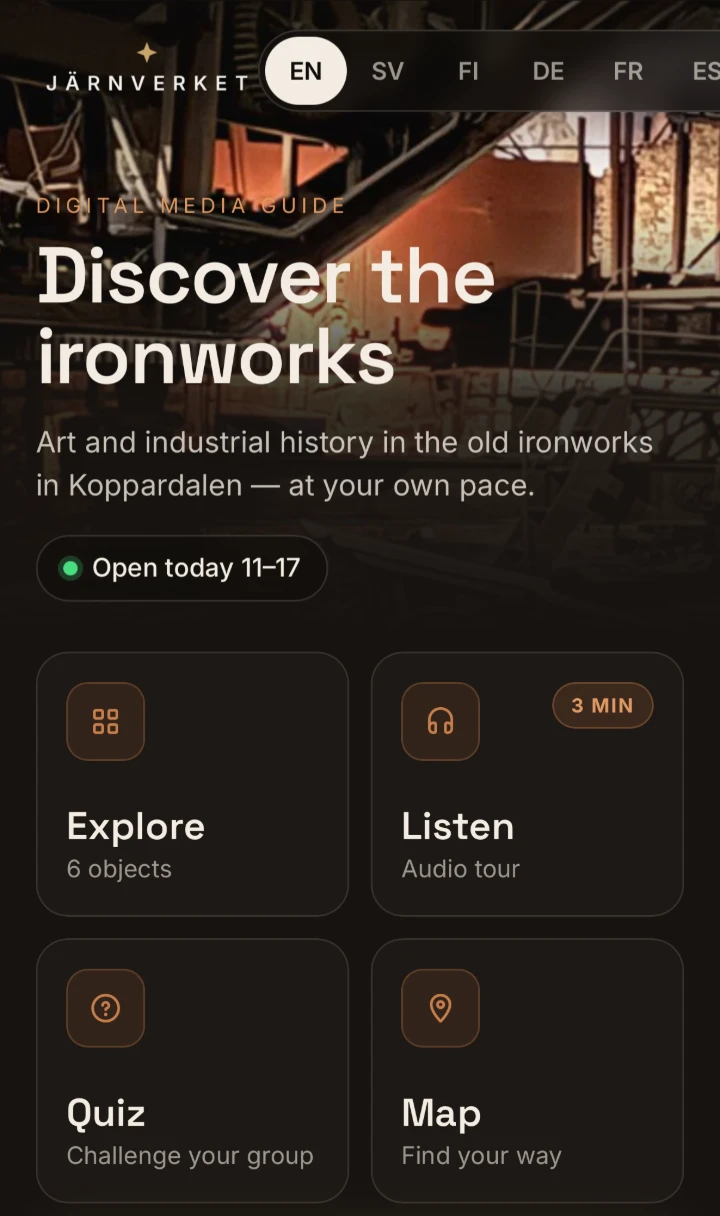
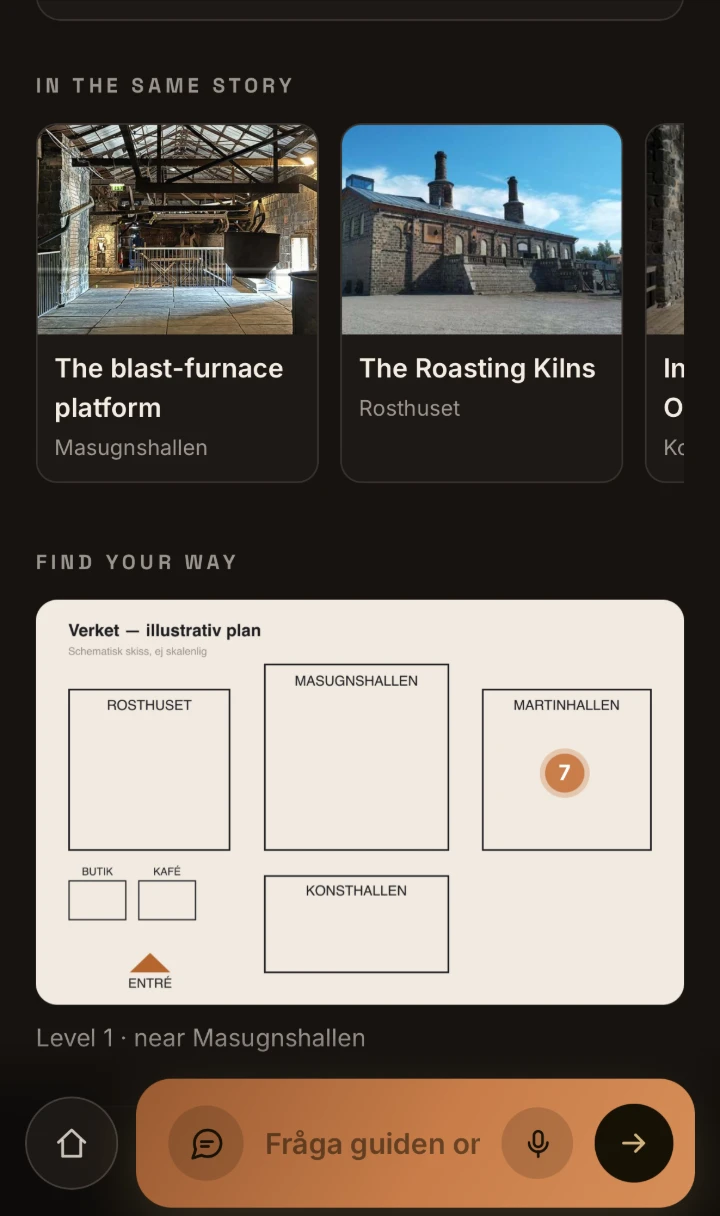
Media guides, routes and interpretation curators create and edit themselves, with no separate content system.
05 / The staff console
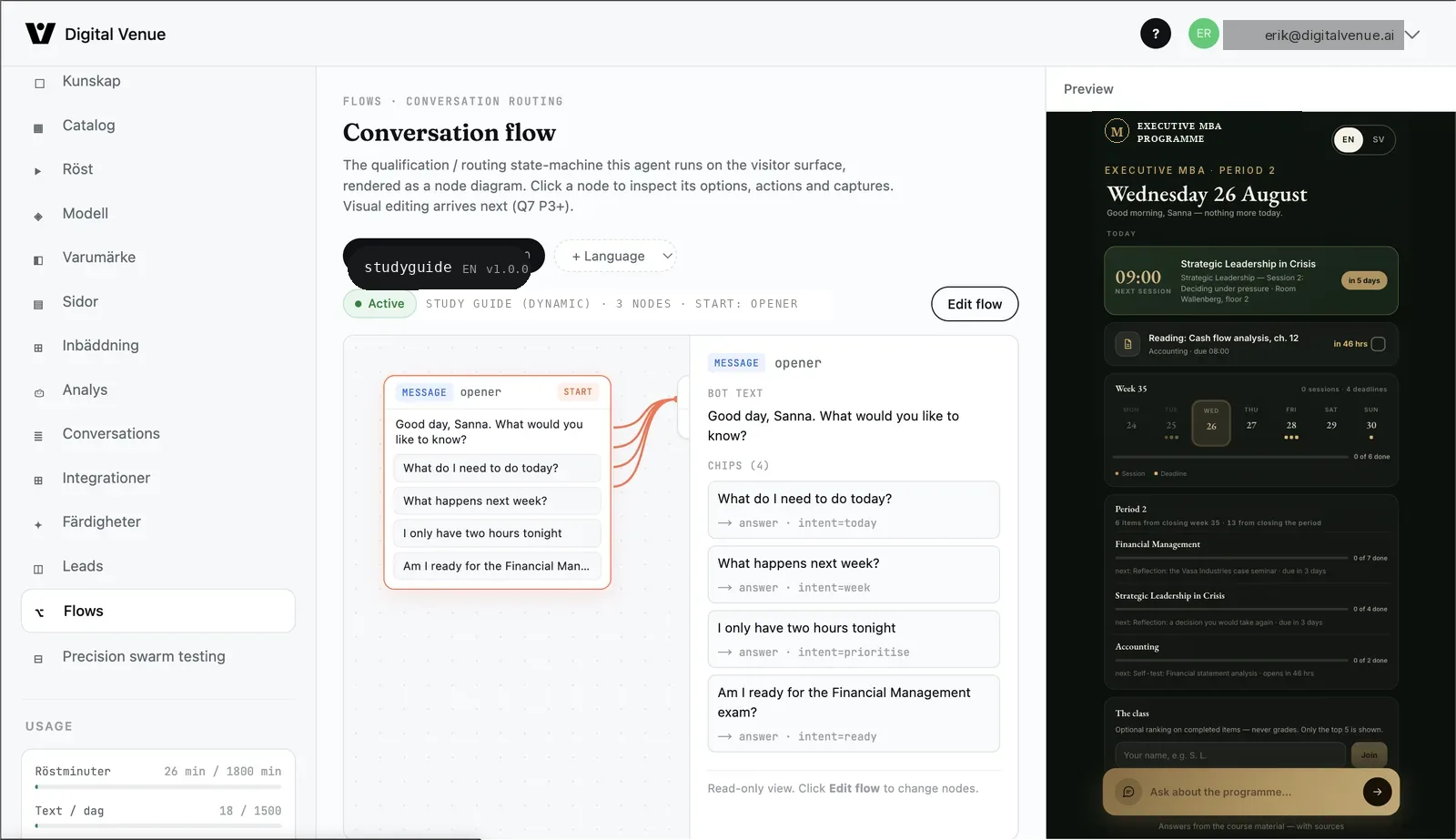
Staff design what the agent does
The routing and qualification logic behind a surface, edited as a node diagram by the people who own the service. We don't script it for you.
Literacy means being able to see inside. Everything here is the institution's own staff console. No developer in the loop, no ticket to us.
06 / The architecture
Systems change. The experience shouldn't.
Digital Venue is a layer, not a replacement. It sits on top of the systems you already own and is built to survive those systems being swapped underneath it.
They arrive with a question in their own words, in whichever language they think in.
It never becomes the home of your catalogue. It reads what you already own, so the systems underneath can be swapped without the visitor noticing.
Stay where they are. Replace one and the surface above it does not change.
The full architecture, the console and how a deployment goes live →
07 / In production
Real institutions, running it today
Deployments · libraries, museums and exhibitions
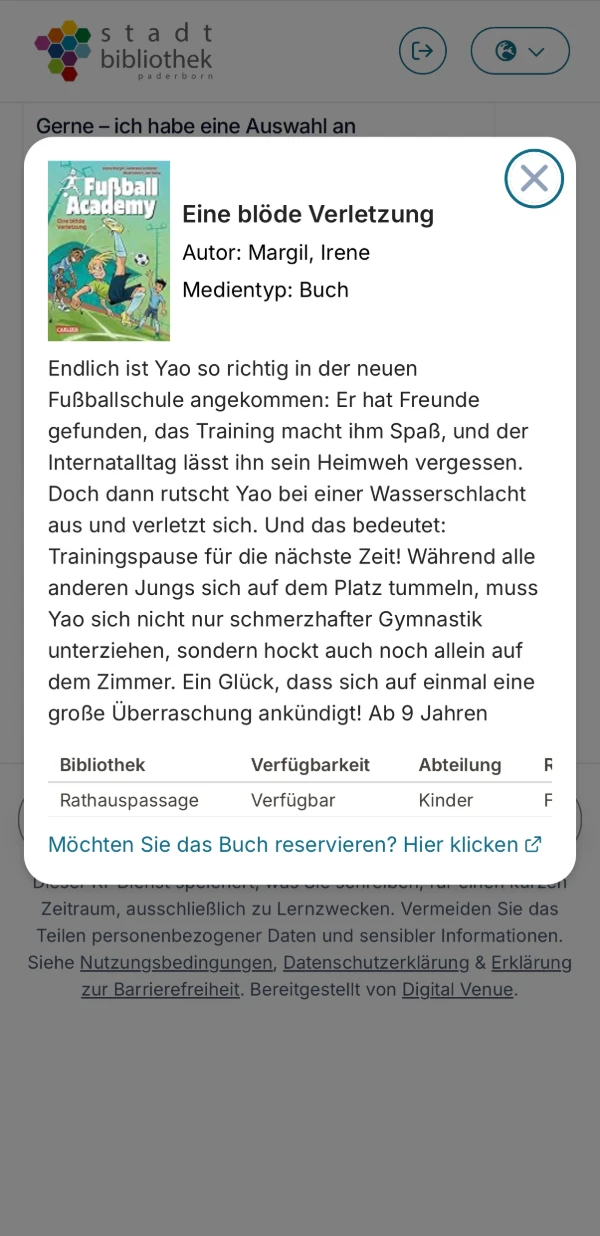
Paderborn
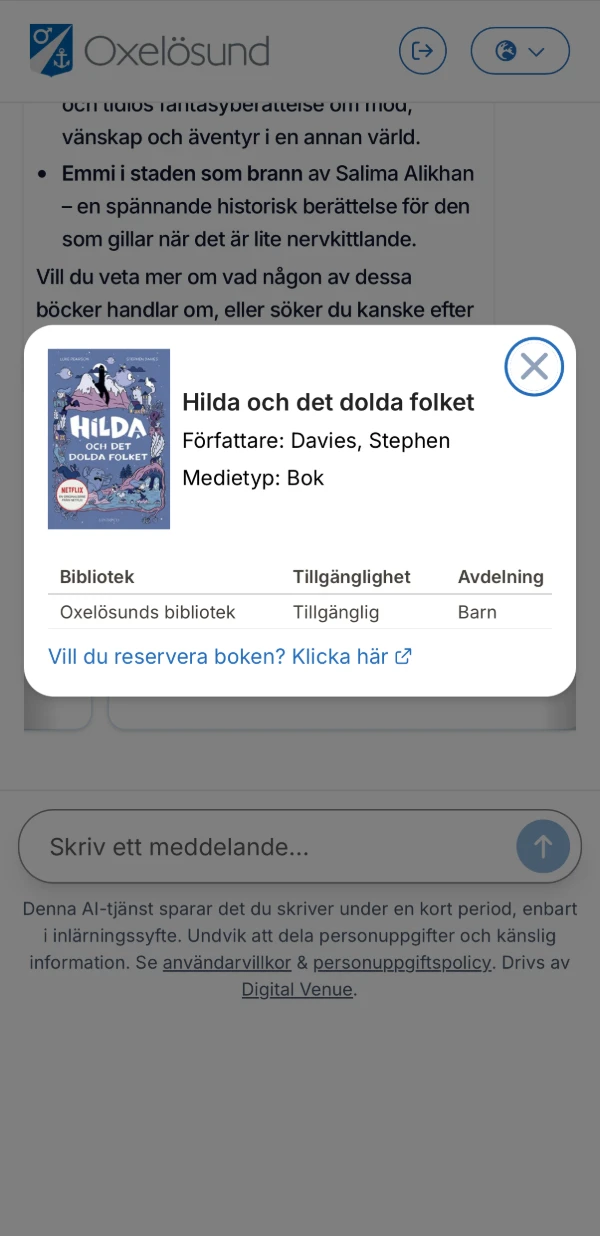
Oxelösund
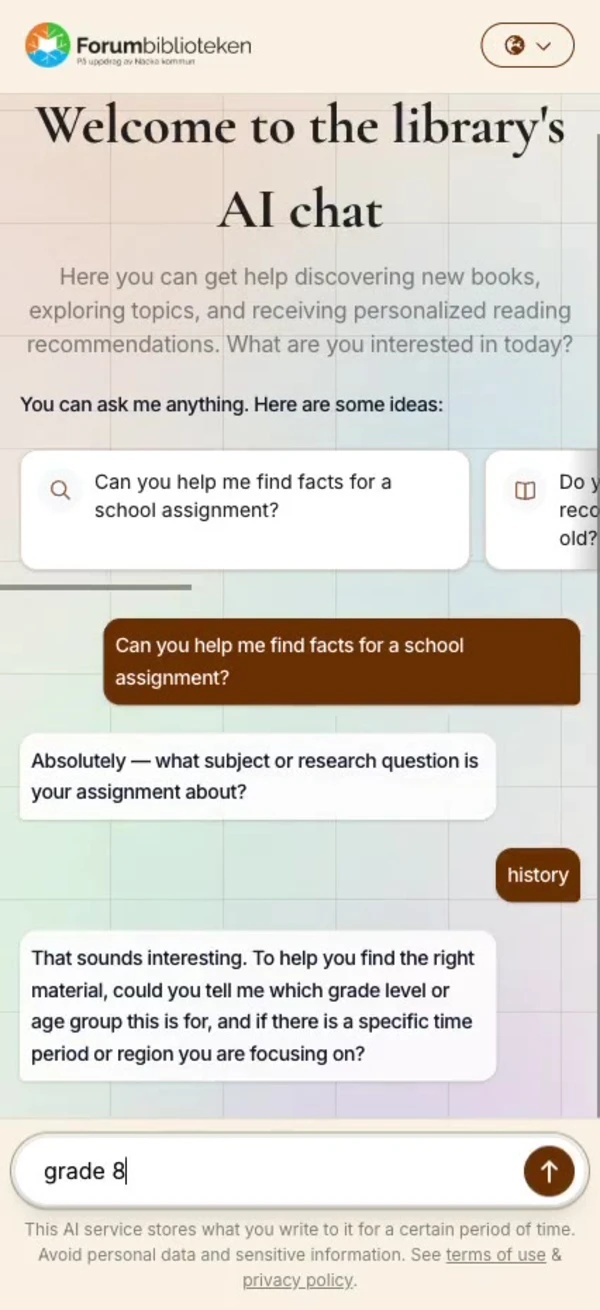
Nacka
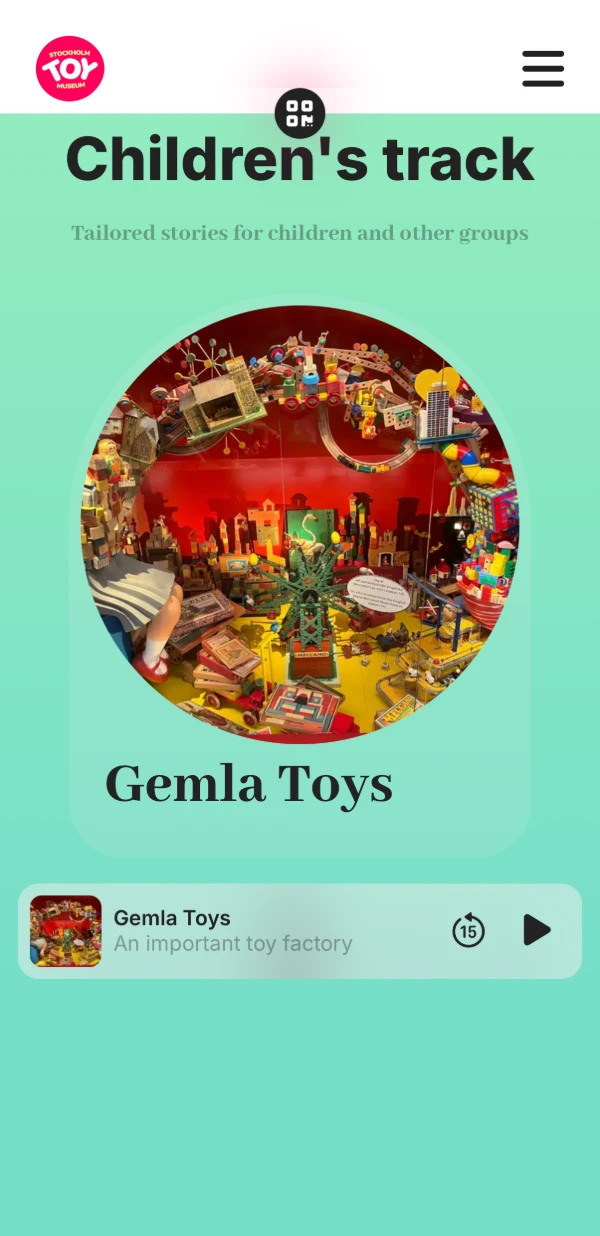
Audience-adaptive visitor app
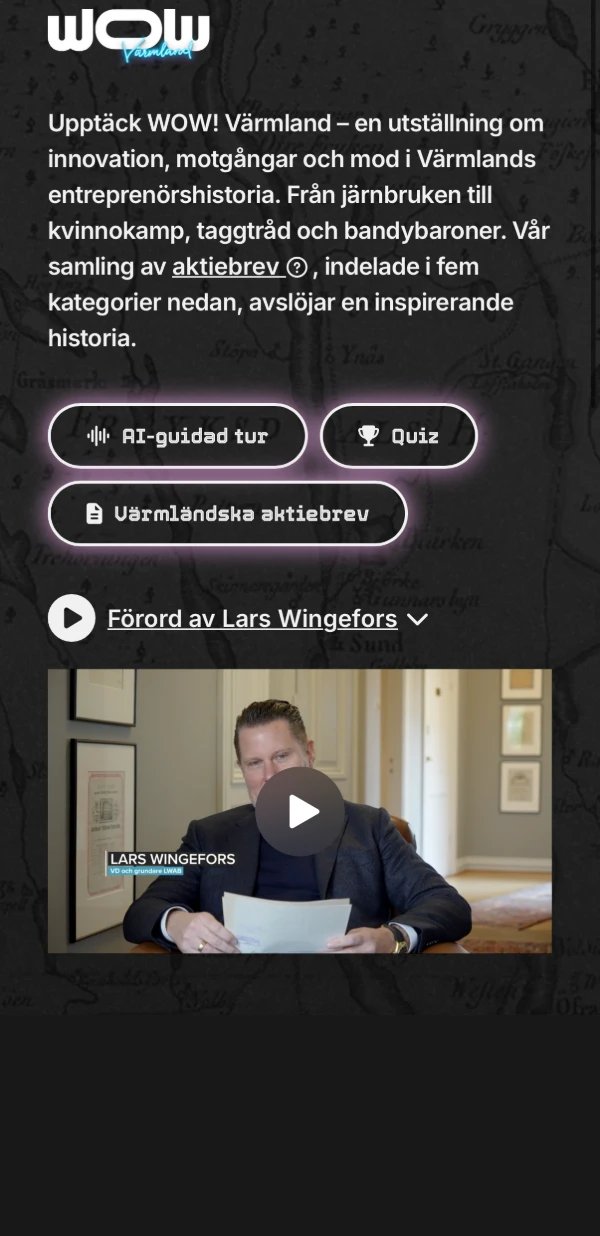
Exhibition, with Lars Wingefors
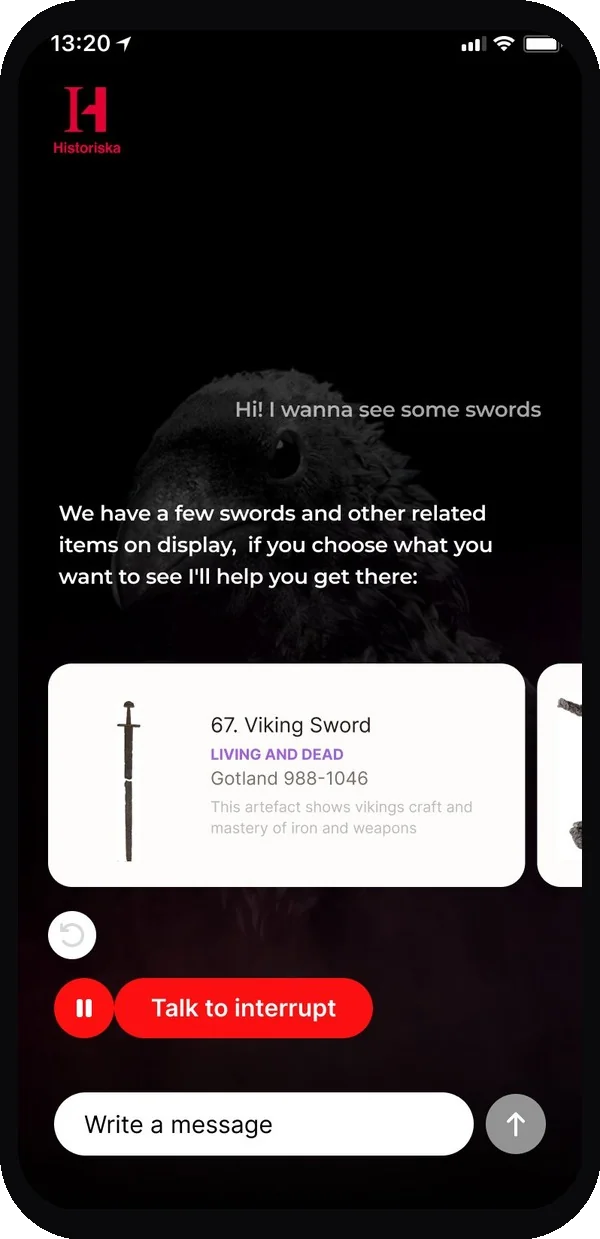
Stockholm · Pilot
Customers











Partners




08 / Trust & sovereignty
Portable by design. Your data, your formats, your exit.
Read the full trust pageThirty minutes, and you'll know whether this fits.
We'll show you a live deployment, walk through what sits underneath it, and tell you plainly what we don't do.